Author Life: Organized Chaos, Emotional Support Lobsters, and Why Perfection is Overrated
March to the Tune of Your Own Piper (And Other Unsolicited Writing Advice)

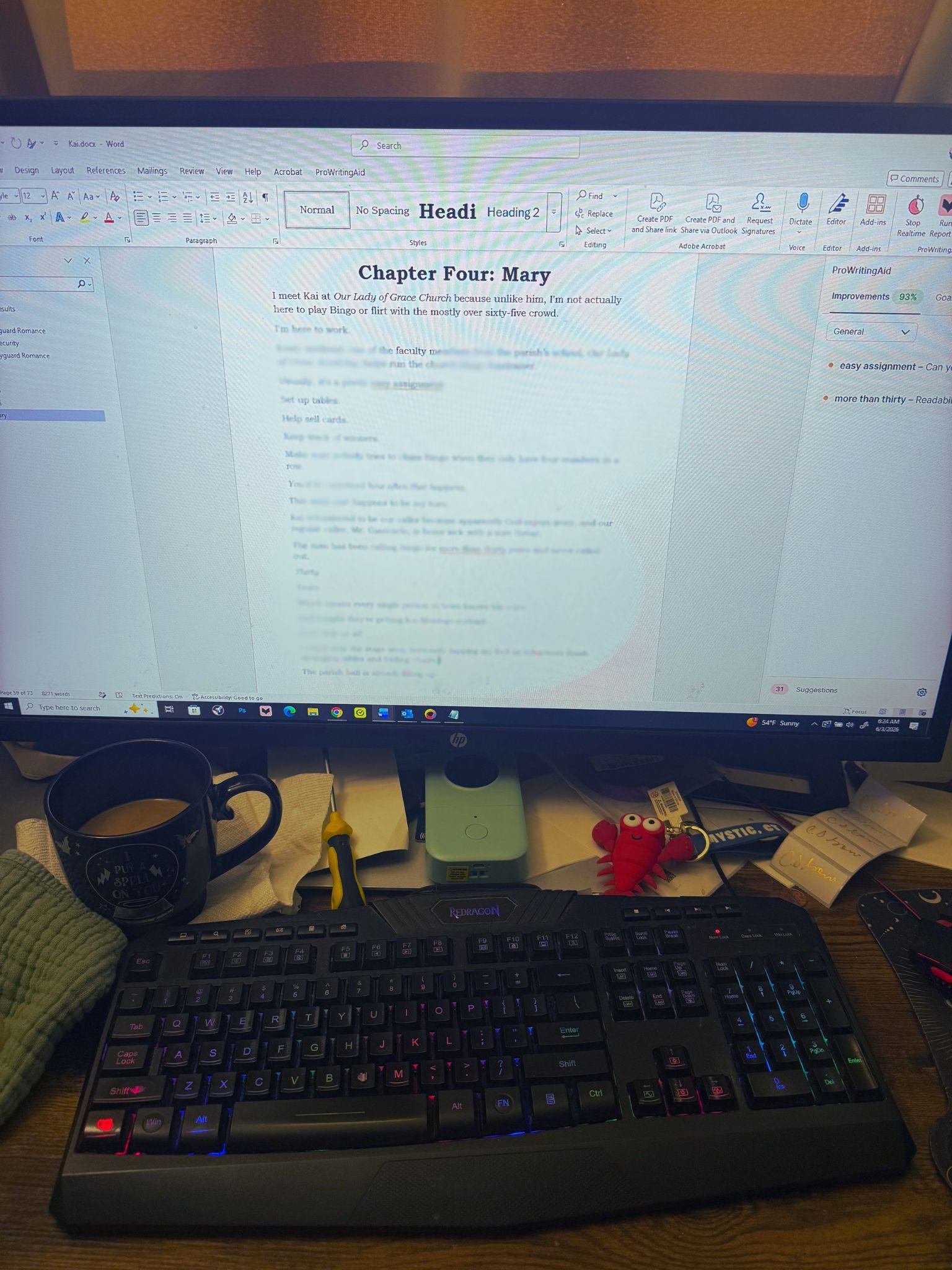
🦞☕ Welcome to my office nook. ☕🦞
This is the place where romances are plotted, heroes fall in love, heroines save themselves, and fictional people routinely refuse to do what they’re told.
It’s also where I currently have:
☕ A large coffee that’s working harder than I am
💻 A laptop open to a manuscript that keeps demanding “just one more chapter”
📱 A Notes app overflowing with random story ideas, character names, snippets of dialogue, and observations that made perfect sense at two o’clock in the morning
📄 Twenty-seven open tabs in said Notes app
🪛 A screwdriver
🏷️ A label maker
🦞 One squishy emotional-support lobster named Leo with terrifying pop-out eyes
And approximately six square inches of actual desk space.
People often imagine authors working in beautiful offices with matching furniture, color-coded notebooks, and a pristine workspace worthy of a Pinterest board.
I’m sure those authors exist.
I am not one of them.
My reality usually involves balancing coffee next to a stack of notes while digging through open files trying to remember why I wrote things like:
“Make him growl more.”
“Add peanut butter.”
“Absolutely no more tea.”
At the time, these notes made perfect sense. Now?
They’re cryptic messages from a past version of myself that I must somehow decipher.
And yet, somehow, the books still get written.
That’s the funny thing about creativity.
When we’re new to writing—or really any creative pursuit—we often believe we need the perfect system before we can be productive.
The perfect office.
The perfect software.
The perfect planner.
The perfect routine.
The perfect amount of uninterrupted time.
But after more than a decade of publishing, I’ve learned something important:
Perfect is wildly overrated.
Some days the words flow.
Some days they don’t.
Some days I hit five thousand words before breakfast.
Some days I spend an hour searching for a note I know I wrote somewhere.
The goal isn’t perfection.
The goal is progress.
The manuscript doesn’t care if your desk is messy.
The story doesn’t care if your notes are scattered across three notebooks and twenty-seven tabs.
The characters don’t care if you’re writing at a beautiful custom desk or at the kitchen table.
They just need you to show up.
One sentence.
One paragraph.
One chapter at a time.
If you’ve been writing for more than five minutes, chances are you’ve received advice.
A lot of advice.
Advice from other writers.
Advice from readers.
Advice from industry experts.
Advice from people who have never written a book but somehow know exactly how you should write yours.
And the advice?
Write every day.
Don’t write every day.
Plot everything.
Never plot.
Write to market.
Don’t chase trends.
Use social media.
Avoid social media.
Publish fast.
Publish slow.
Go exclusive.
Go wide.
Write short.
Write long.
Use tropes.
Avoid tropes.
By the time you’ve listened to everyone, you’re left wondering if the only correct way to be an author is to somehow do all of these things at once.
Here’s the truth I’ve learned after more than a decade in publishing:
Most writing advice isn’t wrong.
It’s just incomplete.
Because what worked for one author may be completely wrong for another.
No one approach is automatically better. They’re all just different roads leading to the same destination.
That’s why one of the most important lessons I’ve learned is this:
March to the tune of your own piper.
Not the loudest voice in the room.
Not the latest social media guru.
Not the author making six figures in a genre you don’t even write.
Your own piper.
Because nobody understands your goals, your schedule, your life circumstances, or your creative process better than you do.
So here’s my unsolicited writing advice:
Write the books you want to write.
Learn the craft.
Learn the business.
Listen carefully.
But don’t surrender your instincts.
March to the tune of your own piper.
Even if everyone else thinks you’re going the wrong way.
Especially then.
Because sometimes the path nobody understands is the one that leads exactly where you’re supposed to be.
And if you’ve been waiting for your workspace, your schedule, or your process to become perfect before you create something, consider this your permission slip to stop waiting.
Create in the chaos.
Write in the mess.
Build the thing anyway.
And if all else fails?
Get yourself a judgmental emotional-support lobster!
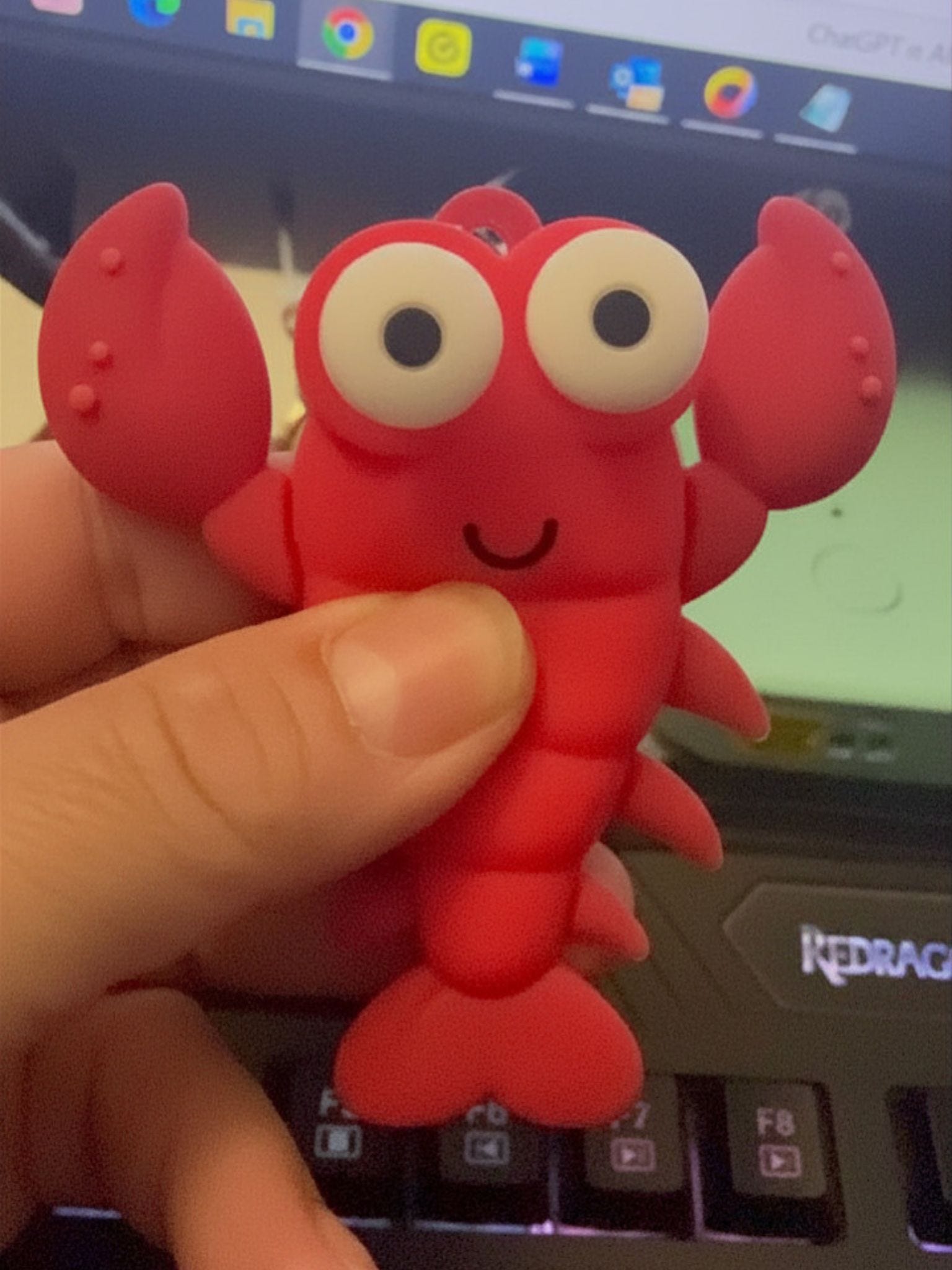
Apparently it’s working for me.
xoxo,
C.D. Gorri
P.S.
So, tell me...
What’s the weirdest thing currently sitting on your desk right now?